The Story of INSV Kaundinya and Why It Matters to India Today
By Upasana Bora Sinha
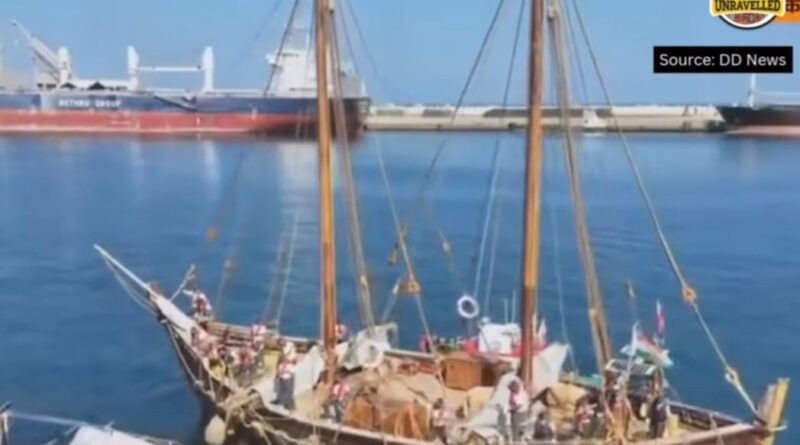
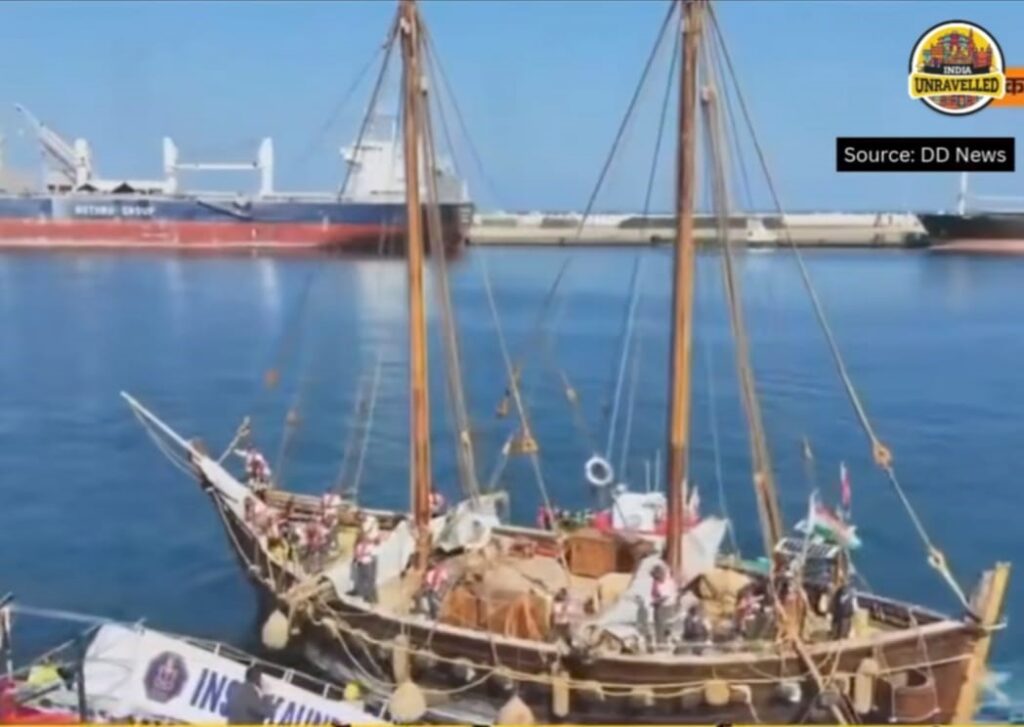
India / Nagaland : At first glance, INSV Kaundinya appears unassuming—a wooden sailing vessel stitched together with coir rope, shaped by human hands rather than machines. Yet behind this modest appearance lies a powerful story that reconnects India with its maritime heritage, indigenous knowledge systems, and sustainable innovation.
The 65-foot Indian Naval Sailing Vessel, built using ancient shipbuilding techniques, is a faithful recreation inspired by a 5th-century painting from the Ajanta Caves. Constructed using coconut fibre, natural resins, and coir-stitching—without a single iron nail—the vessel stands as living proof of India’s advanced seafaring capabilities in ancient times.
Named after Kaundinya, the legendary mariner believed to have sailed from India to Southeast Asia, the ship reflects India’s long-standing role as a maritime civilisation—one driven by exploration, trade, cultural exchange, and innovation.
Reviving a Forgotten Maritime Legacy
The idea behind INSV Kaundinya was not rooted in nostalgia, but in a challenge to modern assumptions. Sanjeev Sanyal, noted economist, historian, author, and member of the Economic Advisory Council to the Prime Minister, has long argued that India’s maritime achievements were not mythical, but technologically real—and unfairly sidelined in mainstream narratives.
Speaking during the voyage, Sanyal remarked that ancient India’s achievements were built by risk-takers, merchants, and explorers who ventured across the Indian Ocean, discovered new lands, and absorbed ideas from other cultures—much like today’s globalised world.
A Voyage of Civilisational Connection
The expedition, led by Commander Vikas Sheoran with a crew of four officers and thirteen naval sailors, was as much about rediscovering history as it was about reaffirming civilisational bonds. Union Minister of Ports, Shipping and Waterways Shri Sarbananda Sonowal described the voyage as a reminder of India’s maritime power and its centuries-old relationship with Oman and the wider Indian Ocean region.
Artisans at the Heart of Innovation
While the Indian Navy served as a dedicated partner and historians, archaeologists, naval architects, and research institutions provided academic support, the heart of the project lay with traditional artisans. Their knowledge—preserved through practice, memory, and oral tradition—enabled the construction of a seaworthy vessel using techniques long dismissed as outdated.
The success of the stitched ship provided undeniable evidence that Indian Knowledge Systems (IKS) were empirical, adaptive, and deeply rooted in observation of nature.
Sustainability Before Its Time
Built entirely from renewable materials and designed to work with natural forces rather than overpower them, INSV Kaundinya aligns seamlessly with today’s discourse on sustainability and green innovation. What modern engineering labels as “eco-friendly design” was once simply good engineering—refined over centuries.
A Broader Lesson for India
INSV Kaundinya is more than a ship; it is a metaphor. Across India’s villages and communities lie countless indigenous technologies and practices that solved real problems with remarkable efficiency—many lost not due to failure, but neglect.
The voyage reminds us that rediscovery is possible. The task ahead is not to romanticise the past, but to critically examine, test, and integrate traditional knowledge on its own merit.
Perhaps, hidden within every community, there is another ‘ship’—quietly waiting to sail again.