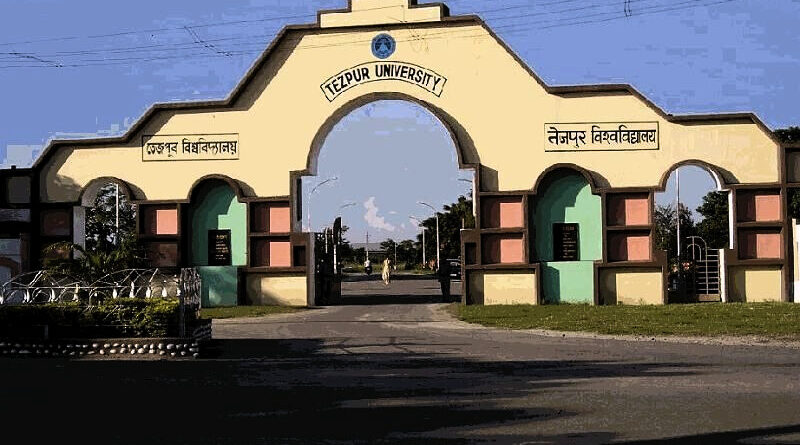
Tezpur University-Led Study Identifies Blood-Based Markers for Early Detection of Gallbladder Cancer
Tezpur | January 2026:
Researchers at Tezpur University have identified distinct blood-based chemical signatures that can differentiate gallbladder cancer cases occurring with and without gallstones, a breakthrough that could significantly aid the early diagnosis of one of the most aggressive gastrointestinal cancers.
The study was led by Dr. Pankaj Barah, Assistant Professor, and Dr. Cinmoyee Baruah, research scholar, from the Department of Molecular Biology and Biotechnology, Tezpur University. The findings have been published in the internationally reputed Journal of Proteome Research of the American Chemical Society (ACS).
A Major Step Towards Early Diagnosis
Gallbladder cancer is among the deadliest gastrointestinal malignancies, largely due to its silent progression and late diagnosis. The disease has a disproportionately high incidence in Northeast India, where it ranks as the third most common cancer. In Assam, the burden of gallbladder cancer is projected to rise further, highlighting the urgent need for non-invasive early detection strategies.
Although gallstones are a known risk factor, a significant number of patients develop gallbladder cancer without any history of gallstones, making diagnosis even more challenging.
“Our findings show that changes in certain chemicals in the blood, known as metabolites, can clearly distinguish gallbladder cancer cases with and without gallstones,” said Dr. Pankaj Barah. “This raises the possibility of developing simple blood-based tests for earlier detection.”
First-of-Its-Kind Metabolomics Study from Northeast India
This pilot study, the first of its kind from Northeast India, analysed blood samples from three distinct groups:
- Gallbladder cancer patients without gallstones
- Gallbladder cancer patients with gallstones
- Individuals with gallstones but no cancer
Using advanced metabolomics techniques, researchers detected hundreds of altered metabolites—180 in gallstone-free cancer cases and 225 in gallstone-associated cases. Importantly, the study identified distinct biomarker panels with high diagnostic accuracy for each cancer variant. Many of these biomarkers involved bile acids and amino acid derivatives, which are known to play roles in tumour progression.
Strong Interdisciplinary and International Collaboration
The research was conducted through a multidisciplinary collaboration involving surgeons, pathologists, pharmaceutical scientists, molecular biologists and computational scientists. Clinical support was provided by:
- Assam Medical College and Hospital, Dibrugarh
- Dr. B. Borooah Cancer Institute, Guwahati
- Swagat Super-Speciality Hospital
Advanced analytical and computational support came from the University of Illinois, Urbana–Champaign (USA) and the CSIR–Indian Institute of Toxicology Research, Lucknow.
Emphasising the translational importance of the study, Dr. Gayatri Gogoi, Pathologist at Assam Medical College, stated:
“By linking tissue pathology with blood metabolomics, this research bridges the gap between laboratory discoveries and clinical diagnosis.”
From a clinical standpoint, Dr. Subhash Khanna, a renowned gastrointestinal surgeon based in Guwahati, described the findings as highly significant.
“The identification of blood-based metabolic markers provides a practical pathway towards early diagnosis and informed clinical decision-making,” he said.
Hope for Non-Invasive Screening in High-Risk Regions
While the researchers caution that larger multi-centre studies are needed before clinical application, the study provides a strong scientific foundation for developing non-invasive screening tools, particularly for high-risk populations in Northeast India.