International Conference on Climate-Resilient Agriculture and Sustainable Development Kicks Off at BHU
•Spotlight on Climate-Resilient Agriculture and Sustainable Development as Agricultural Experts Deliberate on Innovation and Durable Solutions International Conference on Climate-Resilient Agriculture and Sustainable Development Kicks Off at BHU
• Evidence-Based Data Must Guide Research, Policy, and Practice: Vice-Chancellor Prof. Ajit Kumar Chaturvedi
• Climate Change is a Shared Challenge and Requires Collective Solutions: Dr. Himanshu Pathak
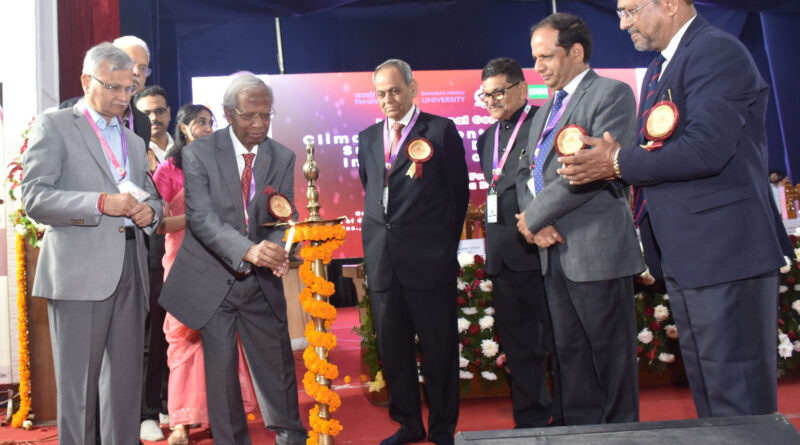
Varanasi : As the global community continues to grapple with the dual challenges of climate change and food security, Banaras Hindu University (BHU) has emerged as a key platform for international dialogue on agricultural innovation and sustainability. The university inaugurated the three-day International Conference on “Climate-Resilient Agriculture for Sustainable Development: Innovations and Solutions (ICCRA-2026)”, bringing together leading agricultural scientists, researchers, policymakers, industry experts, and students from India and abroad.
The inaugural session, held at Swatantrata Bhawan, witnessed thought-provoking discussions focused on strengthening agricultural resilience through innovation, interdisciplinary collaboration, and evidence-based policymaking.
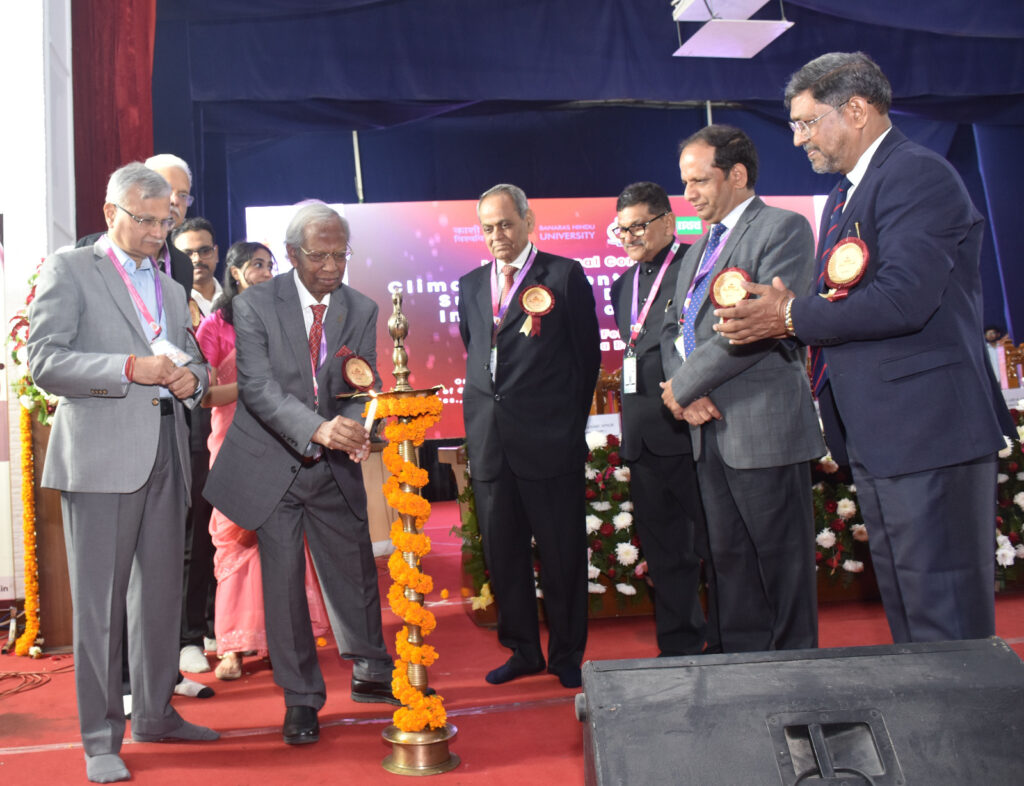
Presiding over the session, BHU Vice-Chancellor Prof. Ajit Kumar Chaturvedi emphasized that the conference deliberations must translate into meaningful and transformative outcomes for both Indian and global agriculture. He stressed the need to scientifically measure and quantify the impact of climate change on agricultural productivity, stating that research, policy, and practice must be guided by robust evidence rather than media-driven narratives. Highlighting the importance of interdisciplinary partnerships, he called for stronger collaboration across institutions and assured full institutional support for initiatives addressing real-world challenges faced by farmers. He also underscored societal accountability in research, urging scientists to demonstrate tangible benefits of laboratory work for communities to maintain public trust and policy support.
Chief Guest Dr. Himanshu Pathak, Director General of the International Crops Research Institute for the Semi-Arid Tropics (ICRISAT), Hyderabad, highlighted that the poorest communities, despite contributing least to climate change, remain the most vulnerable to its consequences. He emphasized that climate change threatens food security, livelihoods, and assets, particularly in vulnerable regions, and requires collective global solutions alongside individual mitigation and adaptation efforts. Dr. Pathak elaborated on the five “Rs” of agricultural resource management — Resistance, Recovery, Rebounding, Regeneration, and Robustness — stressing that integrated management of natural, genetic, and socio-economic resources is essential for building resilient agricultural systems.
Guest of Honour Prof. Punjab Singh, Chancellor of RLBCAU, Jhansi, outlined key challenges confronting agriculture, including sustaining production growth, conserving natural resources, improving resource-use efficiency, enhancing farm profitability, and adapting to climate change. He noted that India must prepare to feed nearly 1.7 billion people by 2050, requiring significant productivity gains without compromising ecological sustainability.
Another Guest of Honour, Padma Bhushan Dr. Ram Badan Singh, highlighted the importance of integrating traditional knowledge with modern technologies supported by strong policies and institutional frameworks. He stated that evidence-based recommendations emerging from the conference could play a pivotal role in shaping national strategies for resilient and low-carbon agricultural systems.
Dr. Shudhanshu Singh, Director of IRRI South Asia Regional Centre, emphasized that climate change is no longer theoretical but a lived reality, especially across the Global South. He stressed the importance of collective international action, equitable access to innovation, bridging yield gaps, optimizing agricultural systems, and translating scientific research into actionable policies and investment frameworks.
Welcoming the delegates, Prof. U. P. Singh, Director of the Institute of Agricultural Sciences, highlighted BHU’s long-standing contributions to agricultural education, research, and innovation, noting that international participation adds immense value and strengthens global cooperation.
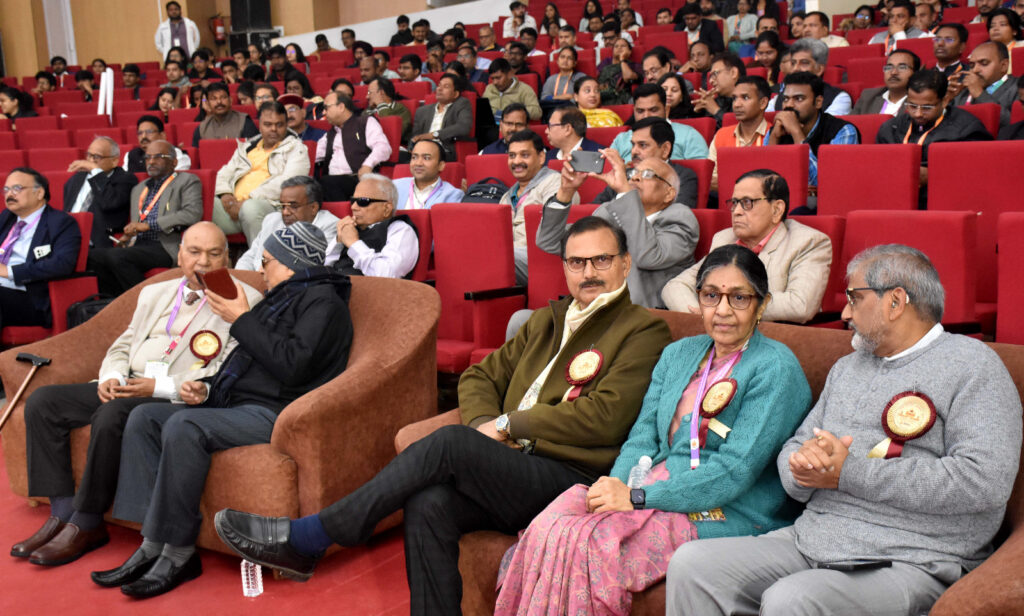
Prof. Shravan Kumar Singh, Convener of the Conference and Head of the Department of Genetics and Plant Breeding, stated that climate change, population growth, diminishing natural resources, and environmental degradation are placing unprecedented pressure on global food systems. He explained that ICCRA-2026 focuses on nine interlinked themes, including climate-resilient crop varieties, biodiversity conservation, soil health management, water-efficient farming practices, and the use of AI, drones, remote sensing, and nanotechnology in smart agriculture systems.
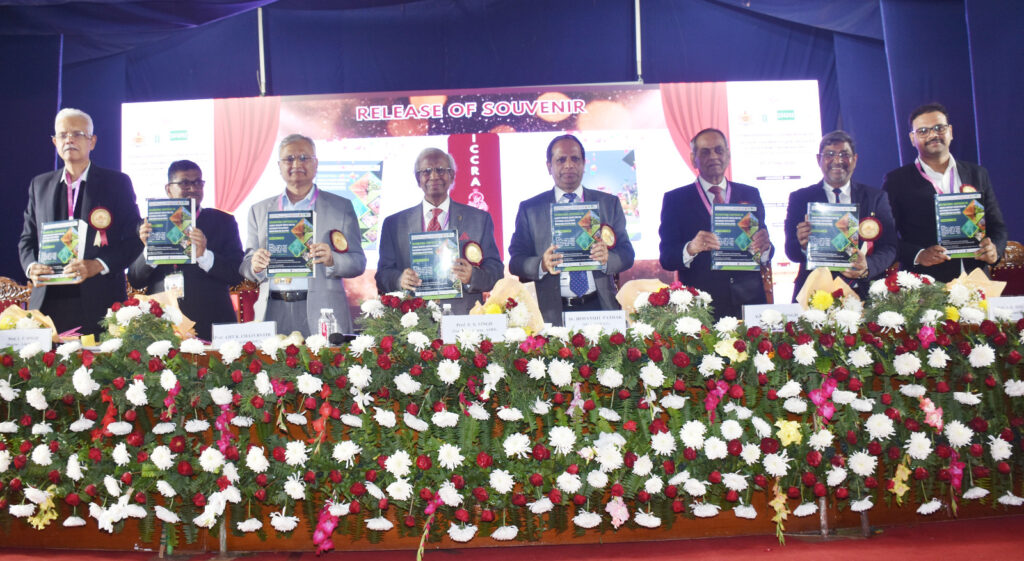
The inaugural session also featured the formal release of the conference souvenir. The proceedings were conducted by Dr. Vijai Pandurangam, Department of Plant Physiology, BHU, and concluded with a vote of thanks by Dr. J. Jorben, Organizing Secretary of the Conference.
The three-day conference, concluding on February 7, provides a vital platform for sharing cutting-edge research, exchanging innovative ideas, and strengthening linkages between science, policy, and practice. With participation from over 500 delegates representing 24 Indian states and several countries, ICCRA-2026 reflects strong national and international engagement toward building sustainable and climate-resilient agricultural systems.