IIT Guwahati Develops Sunlight-Driven Catalyst to Convert Carbon Dioxide into Methanol Fuel
Guwahati | January 5, 2026 :
In a major breakthrough towards clean energy and environmental sustainability, researchers at the Indian Institute of Technology (IIT) Guwahati have developed a sunlight-driven photocatalyst capable of converting carbon dioxide (CO₂) into methanol fuel. The innovation offers a promising solution to rising energy demands while reducing greenhouse gas emissions.
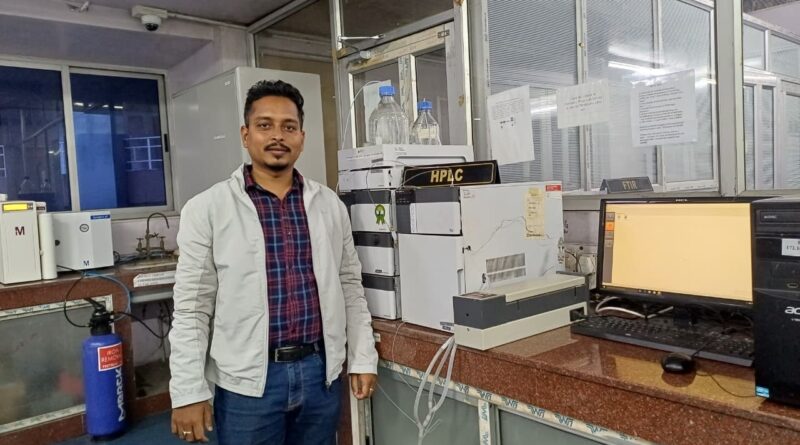
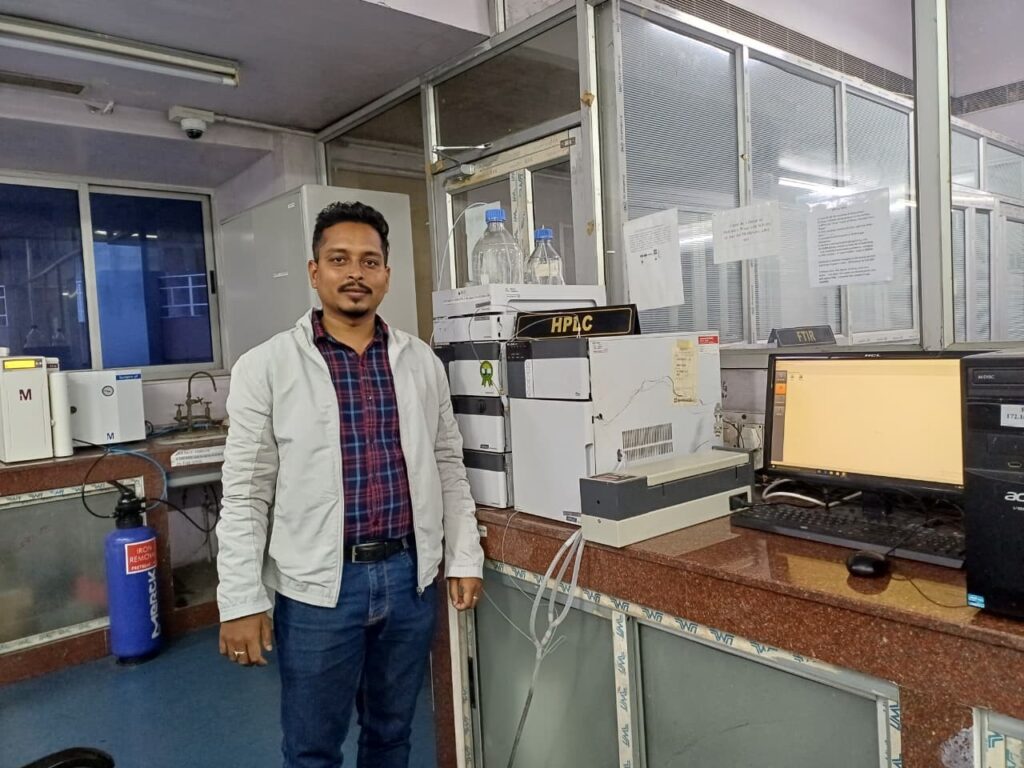
The research was led by Prof. Mahuya De, Professor, Department of Chemical Engineering, IIT Guwahati, along with research scholar Mr. Nayan Moni Baishya. The findings have been published in the reputed Journal of Materials Science.
The continued reliance on petroleum-based fuels has significantly contributed to carbon emissions and global warming. Addressing this challenge, the IIT Guwahati team focused on developing a photocatalytic method to transform CO₂ into a clean and usable fuel using solar energy.
Globally, scientists have explored graphitic carbon nitride, a low-cost, metal-free, and non-toxic material, for CO₂ conversion. However, limitations such as rapid energy loss and low fuel yield have hindered its effectiveness. To overcome this, the IIT Guwahati researchers combined graphitic carbon nitride with few-layer graphene, an ultra-thin carbon material known for excellent electrical conductivity and energy transfer properties.
Explaining the significance of the work, Prof. Mahuya De said,
“The present work is expected to contribute towards mitigating environmental problems while simultaneously promoting green energy. Converting carbon dioxide to cleaner fuel using solar energy is a promising step in this direction.”

The study demonstrated that incorporating few-layer graphene significantly enhanced energy retention in the photocatalyst under visible light and sunlight. This resulted in improved light absorption, efficient charge generation, and longer catalyst activity.
Among the tested composites, the catalyst containing 15 wt% graphene showed the highest efficiency in converting CO₂ into methanol. It also exhibited strong stability, making it suitable for potential real-world applications.
The technology has the potential to be deployed in thermal power plants, cement industries, steel manufacturing units, and petrochemical refineries, supporting the transition towards a circular carbon economy and a cleaner energy future.
As a next step, the IIT Guwahati team plans to scale up the technology and develop a durable photocatalytic system capable of converting industrial CO₂ emissions into clean fuel on a practical scale.
Disclaimer: The research is currently at the laboratory stage and requires further validation before commercial application.