IIT Bombay Develops Sunlight-Charged Wearable ‘Thermal Battery’ for Sustainable Heating
Mumbai :
Researchers at the Indian Institute of Technology Bombay (IIT Bombay), in collaboration with IISER Thiruvananthapuram, have developed a sunlight-charged, wearable thermal battery that can absorb solar energy, store it as heat, and release warmth in the absence of light—without using electricity, wires, or bulky components.
The innovative technology has the potential to transform personal heating solutions, especially in cold climates, while significantly contributing to decarbonization of energy use.
A Smarter Way to Stay Warm
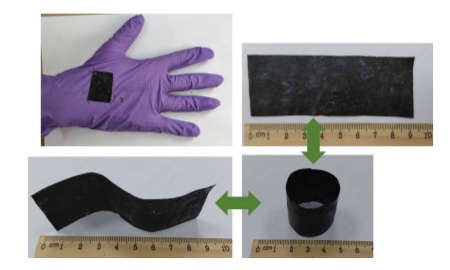
Unlike conventional winter clothing that merely traps body heat, the newly developed thermal battery fabric patch actively captures sunlight and stores it internally as heat. When sunlight is no longer available, such as during nighttime, the stored heat is gradually released, providing sustained warmth.
The material is lightweight, flexible, solid-state, and wearable, making it suitable for integration into clothing such as gloves and jackets.
Why Thermal Batteries Matter
More than 60% of global energy consumption is thermal, much of it still dependent on fossil fuels for space heating and industrial processes. Thermal batteries offer a sustainable alternative by storing heat directly, eliminating the need for electrical conversion.
Unlike conventional batteries, thermal batteries:
- Operate without electrodes or wiring
- Offer higher durability and safety
- Are easier to manufacture and maintain
This makes them a promising solution for clean energy and climate action.
Breakthrough Polymer Technology
The research team engineered a novel polymer by combining polyethylene glycol (PEG) and polystyrene co-allyl alcohol (PSAA). While PEG stores heat efficiently, PSAA provides mechanical strength, allowing the material to remain solid even at higher temperatures.
As the temperature rises, the polymer undergoes a solid-state phase transition, absorbing heat without melting. The addition of graphene oxide enables efficient direct solar-to-heat conversion.
“We created a multifunctional material that captures sunlight, converts it into heat, spreads it efficiently, and stores it reversibly—all within a single solid composite,”
said Prof. Chandramouli Subramaniam, IIT Bombay.
High Performance Exceeds Global Benchmarks
When exposed to sunlight, the thermal battery:
- Reaches temperatures of up to 69°C within minutes
- Achieves ~50 Wh/kg energy density
- Delivers ~97% heat-storage efficiency
- Remains stable over 300 charge-discharge cycles
These performance levels exceed the U.S. Department of Energy targets for phase-change thermal storage materials, marking a rare success for polymer-based systems.
Wearable Prototype Successfully Demonstrated
The polymer composite was coated onto cotton fabric and integrated into a wearable glove. During testing, the glove heated rapidly under sunlight and released stored heat gradually in the dark, while remaining comfortable for the wearer.
“All components used are biocompatible and safe for direct contact with skin,”
emphasized Prof. Sandip Saha, IIT Bombay.
Towards Personalized Thermal Comfort
The innovation opens doors to personalized heating, where individuals are warmed directly rather than heating entire rooms—leading to major energy savings. Such wearable thermal batteries could benefit:
- People in cold regions
- Outdoor workers
- Defence and disaster-relief personnel
- Energy-efficient smart clothing applications
Research Collaboration and Publication
The study was led by Mr. Goutam Nayak, Prof. Sandip Saha, and Prof. Chandramouli Subramaniam of IIT Bombay, in collaboration with Prof. Vinesh Vijayan from IISER Thiruvananthapuram.
The research has been published in the international journal Small.