IIT Bombay and NTPC Drill India’s First CO₂ Storage Test Well
Second Well Underway
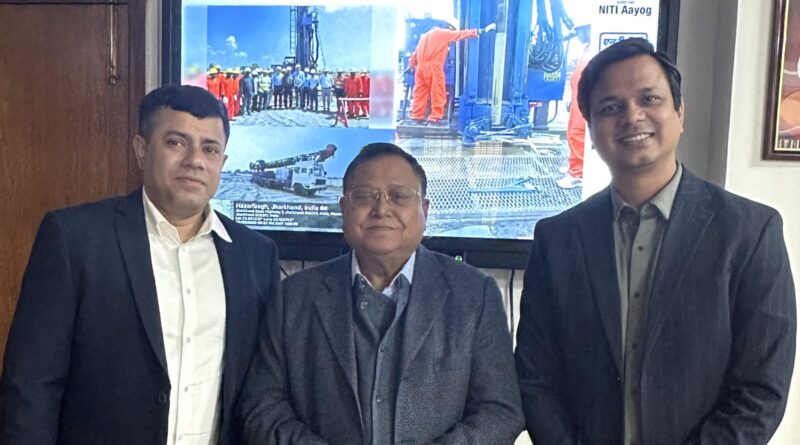
Mumbai : In a major milestone for India’s Carbon Capture, Utilisation and Storage (CCUS) journey, NTPC Ltd. and the Indian Institute of Technology Bombay (IIT Bombay) have successfully completed the drilling of India’s first test well for geological CO₂ storage in sedimentary formations such as coal and sandstone.
The breakthrough marks a significant academia–industry collaboration aimed at supporting India’s net-zero commitments and accelerating indigenous CCUS technologies.
🇮🇳 National CCUS Initiative under NITI Aayog
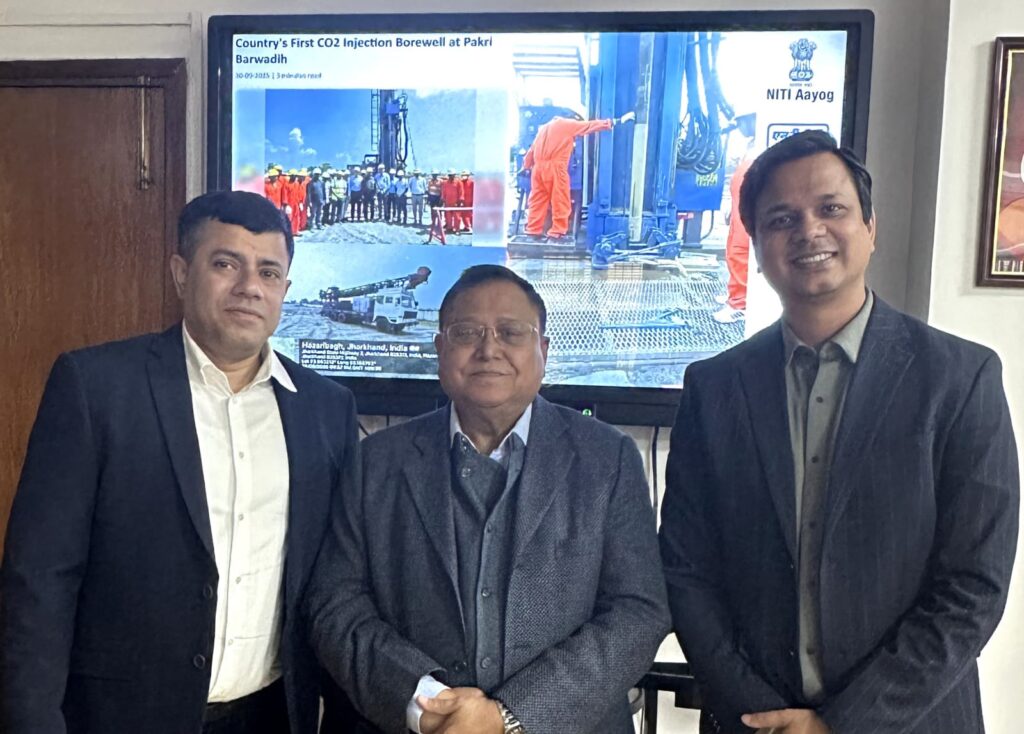
The collaboration was launched in November 2022 under the aegis of NITI Aayog, Government of India, bringing together:
- NETRA – the R&D wing of NTPC, and
- Department of Earth Sciences, IIT Bombay
The partnership led to the development of India’s first Geological CO₂ Storage Atlas for coalbed methane–rich coalfields, offering:
- Layer-by-layer simulation results
- Experimentally validated geological inputs
- Quantified CO₂ storage potential across four major coalfields
🛢️ First Well Completed, Second Underway
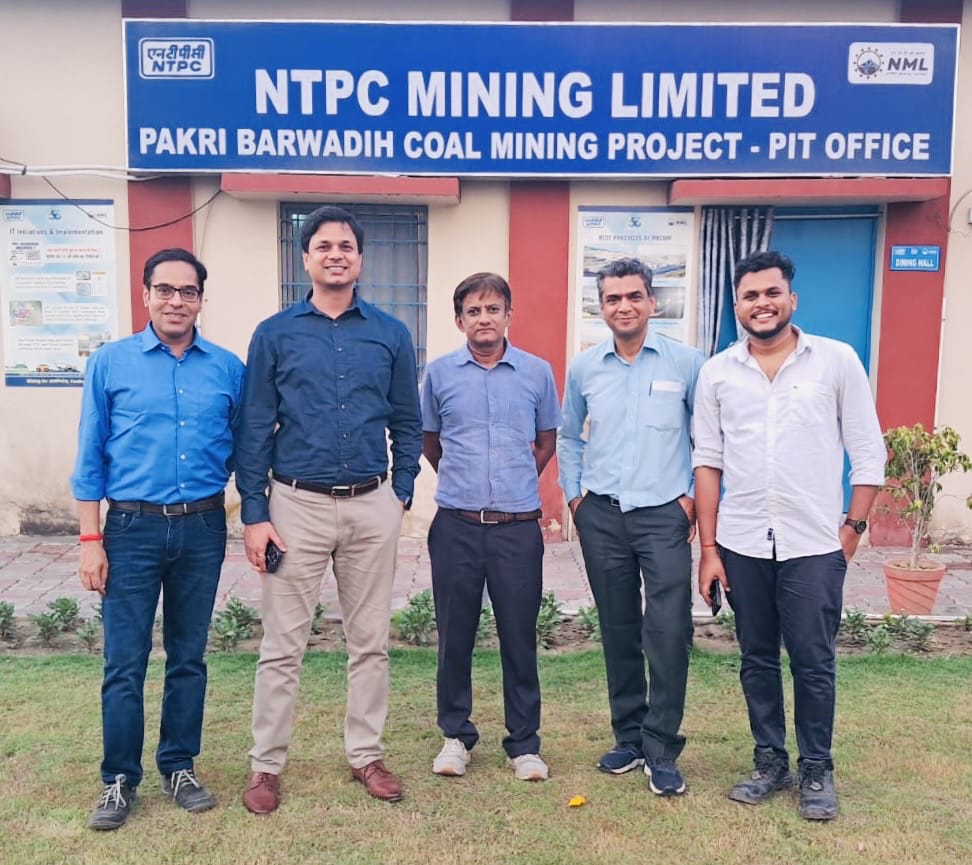
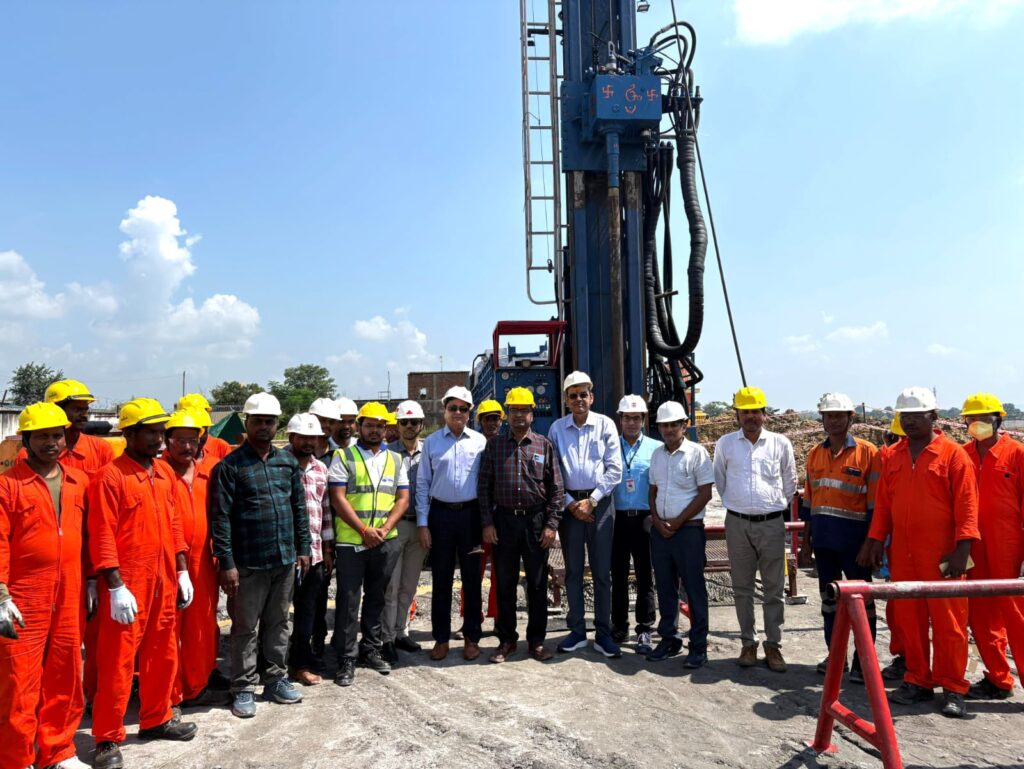
In September 2025, NTPC and IIT Bombay initiated India’s first dedicated CO₂ storage drilling at Pakri Barwadih, near a coal mining area in the North Karanpura coalfield.
- The first well, drilled to a depth of 1,200 metres, was successfully completed on November 15, 2025
- A second well drilling commenced on December 21, 2025
- The wells will be used for CO₂ injection and plume monitoring
Preliminary assessments indicate that the Pakri-Barwadih block could potentially store up to 15.5 million tonnes of CO₂ over a 10-year injection period.
🗣️ Leadership Speaks
Dr. V. K. Saraswat, Member, NITI Aayog, and Chairman, Advisory Committee, DST–National Centre of Excellence (NCOE) in CCUS at IIT Bombay, stated that as India advances towards its ‘Panchamrit’ climate goals, accelerating indigenous science and technology for commercial CCUS deployment is essential to achieving Atmanirbhar Bharat and Viksit Bharat objectives. He emphasized the need for:
- Rigorous subsurface characterisation
- Conservative injection pressure limits
- Robust well design and sealing
- Continuous monitoring of pressure and seismicity
Mr. Gurdeep Singh, Chairman & Managing Director, NTPC, termed the achievement a crucial step towards decarbonisation, congratulating the teams involved.
Prof. Shireesh Kedare, Director, IIT Bombay, highlighted the Institute’s role in translational R&D, stating that such initiatives are central to shaping India’s energy transition roadmap.
🔬 From Lab Research to Field Deployment
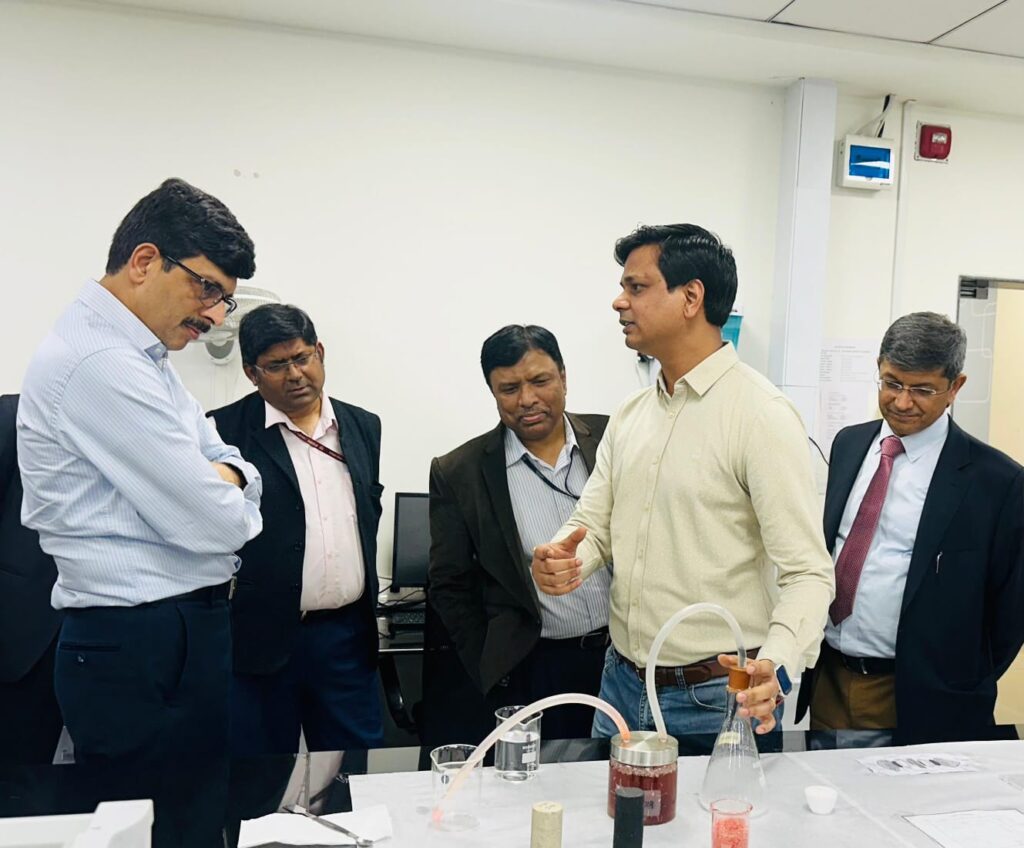
Project Lead Prof. Vikram Vishal noted that the initiative marks a decisive shift from laboratory research to field-scale implementation. He thanked NTPC and NITI Aayog for their visionary leadership and added that the project will deliver:
- Feasibility and risk assessments
- Detailed storage complex analysis
- Commercial CCS development plans
🔁 Building on a Proven Track Record
The collaboration builds on earlier successes. In 2017, IIT Bombay and NTPC jointly developed India’s first CO₂ capture and utilisation facility in the power sector, leading to the Vindhyachal CCU plant, which:
- Captures 20 tonnes of CO₂ per day
- Converts CO₂ into fuel-grade methanol
⚡ Mission-Mode Push for CCUS in India
India’s CCUS efforts are being pursued in mission mode, with the Ministry of Power as the nodal agency and strong inter-ministerial coordination to scale CCUS technologies across hard-to-abate sectors.
At the 25th Prime Minister’s Science, Technology & Innovation Advisory Council (PM-STIAC) meeting, chaired by Prof. Ajay Kumar Sood, Principal Scientific Adviser to the Government of India, experts emphasized the need for:
- A robust policy framework
- Strong institutional mechanisms
- Widespread CCUS adoption
These steps are critical to reducing India’s emissions intensity and achieving net-zero targets.
🏛️ About IIT Bombay
Established in 1958, IIT Bombay is a globally recognised leader in science and engineering education and research. Declared an Institution of Eminence in 2018, the Institute comprises:
- 17 academic departments
- 47 academic centres, programmes, and labs
- 3 schools
With over 75,000 alumni, 750+ faculty members, and world-class research output, IIT Bombay was ranked 2nd in India and 129th globally in the QS World University Rankings 2026.